01
Appreciative Approach
Work starts from documented strengths, not a list of failures. The first task in the field is to record what already works, because that is what change is built on.


Neev means foundation. Tri-Impact does not arrive with an outside blueprint and impose it. The work begins from what a partner already does well, documents that strength, and builds on it. The same cycle runs beneath every implementation programme Tri-Impact carries out, which is why the work holds in the field and why it is documented in full.
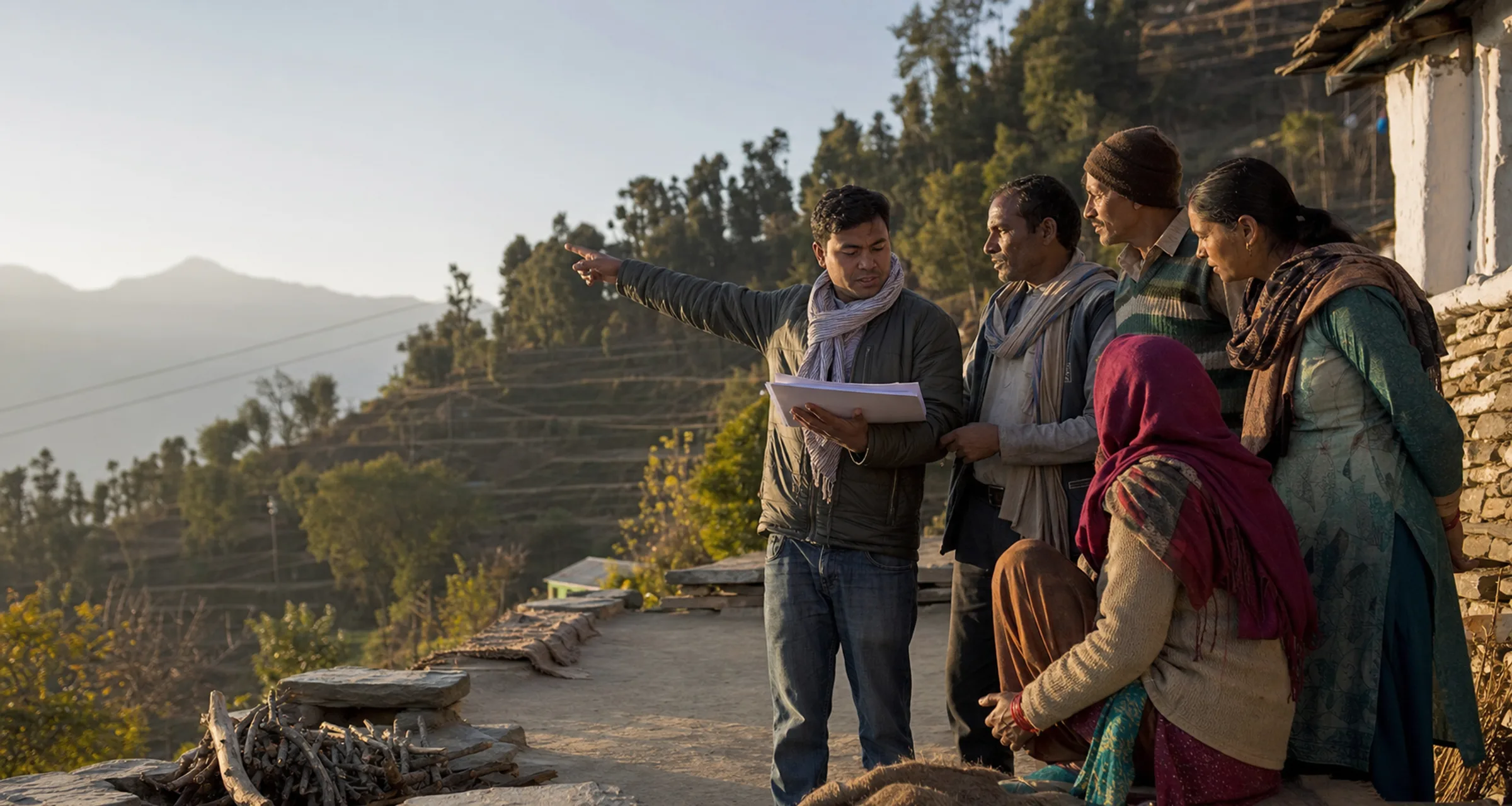
Many interventions enter through deficit. They define the problem as a list of gaps, design a fix from outside, carry it out, and leave. The diagnosis is often right and the change rarely lasts, because nobody among the people involved owns it once the team has gone. Tri-Impact works the other way. It begins by recognising what already functions, the masons building flood-resilient housing, the weavers holding generations of design knowledge, the homeworkers running their own piece-rate networks, and treats that as the ground to build on. Change is shaped together with the partner, which is the only basis on which it continues after Tri-Impact steps back.
The Neev Cycle builds on SEED-SCALE, adapted through fourteen years of field practice.
Defines the problem as a list of gaps. Imposes a fix from outside. Ends when the project ends.
Documents what already works. Builds the fix with the partner. Continues after Tri-Impact steps back.
Work starts from documented strengths, not a list of failures. The first task in the field is to record what already works, because that is what change is built on.
Partners share honest information only when the relationship earns it. Trust is built through dialogue about their own successes before any expectation is placed on them.
Goals are set together, not handed down. Everyone with a stake, the people doing the work, the institutions backing it, and the local bodies enabling it, shapes the plan, so it is shared and owned.
Every step is documented, recorded to the individual where the work touches individuals, so progress can be shown rather than claimed.
Each cycle starts with willingness, earns trust, opens into honest exchange, and ends in documented action that feeds the next round.
Begin only where there is genuine willingness. Change pushed onto an unwilling partner does not last, so the cycle starts with those ready to engage.
Document what the partner already does well before anything else. This record of existing strength is the foundation the rest of the work stands on.
Hold structured conversations about those successes. Recognising what works first is what earns the trust needed for honest exchange later.
Record what each stakeholder wants from the work, the people it involves, the institutions funding or overseeing it, and the local bodies around it, so the plan answers real interests rather than an outside template.
Close knowledge gaps in both directions. Partners gain what they need to act, and Tri-Impact learns what conditions on the ground will bear.
Trace every actor and dependency around the issue, from the household outward, so the work addresses the whole system and not one visible symptom.
Act, record what happens to the individual, and feed the evidence into the next cycle. Documentation here is not a closing report, it is the starting point of the next round.
The work does not close with a report. It closes with workers enrolled in systems they were excluded from, communities holding adaptive practices they built themselves, and craft economies with market pathways that did not exist before. That is what fourteen years of consistent methodology produces.

The cycle holds across every kind of on-the-ground work. It runs the same way alongside a hill community adapting to water stress, a weaver enterprise defending its craft, and an institution reaching households at scale. The four principles and the seven steps stay constant. What changes is the partner and the conditions each cycle runs in. Within Decent Work, the same cycle underpins Roshni, the capacity-building initiative that helps businesses understand their own production networks and act on what they find.
The Neev Cycle carries principles, a sequence, and a documentation practice that have held under pressure across many settings. What it does not carry is the assumption that every context is the same. Each programme brings its own constraints, its own community, and its own timeline. The cycle has to fit those conditions, not the other way around. Tri-Impact works alongside partners to make that fit, drawing on where the methodology has held before and where it has had to bend.
How the work is grounded
How the work moves
What each application teaches
Applied with partners, adapted to what each context requires.
Hazard, geography, local practice
worker visibility, rights, health, access
Skills, materials, market pathways
For institutions working toward durable, community-owned change.
A standard rollout arrives with an outside view of the problem and rarely grasps the nuances that cause it. It imposes external frameworks and fixes that seldom last, because the communities involved never own them, so they hold only for the life of one project and no lasting change follows. The Neev Cycle works the other way. It builds a foundation first, documenting the strengths a partner already holds, because the answer is usually inside the knowledge and expertise the community already has. From that foundation it builds systemic change the partner continues to own.
Yes. Other organisations are free to adopt it. Nothing about the method is proprietary. Because every implementation programme carries different issues and constraints, the cycle is adapted to each context, with Tri-Impact and the partner shaping that fit together rather than following a fixed template.
Change that lasts, owned by the communities the work involves, because that is what the Neev Cycle is built for. It also leaves individual-level records, before-and-after data and field documentation, open for partners and funders to check independently.
Across Uttar Pradesh, Rajasthan, NCR and Uttarakhand, under climate, decent work and livelihood programmes running for fourteen years.
Any on-the-ground implementation programme working toward long-term, systemic change. Wherever field implementation aims at durable, community-owned change, the cycle fits, across climate action, decent work and livelihood security.