


Training and co-design
Better work
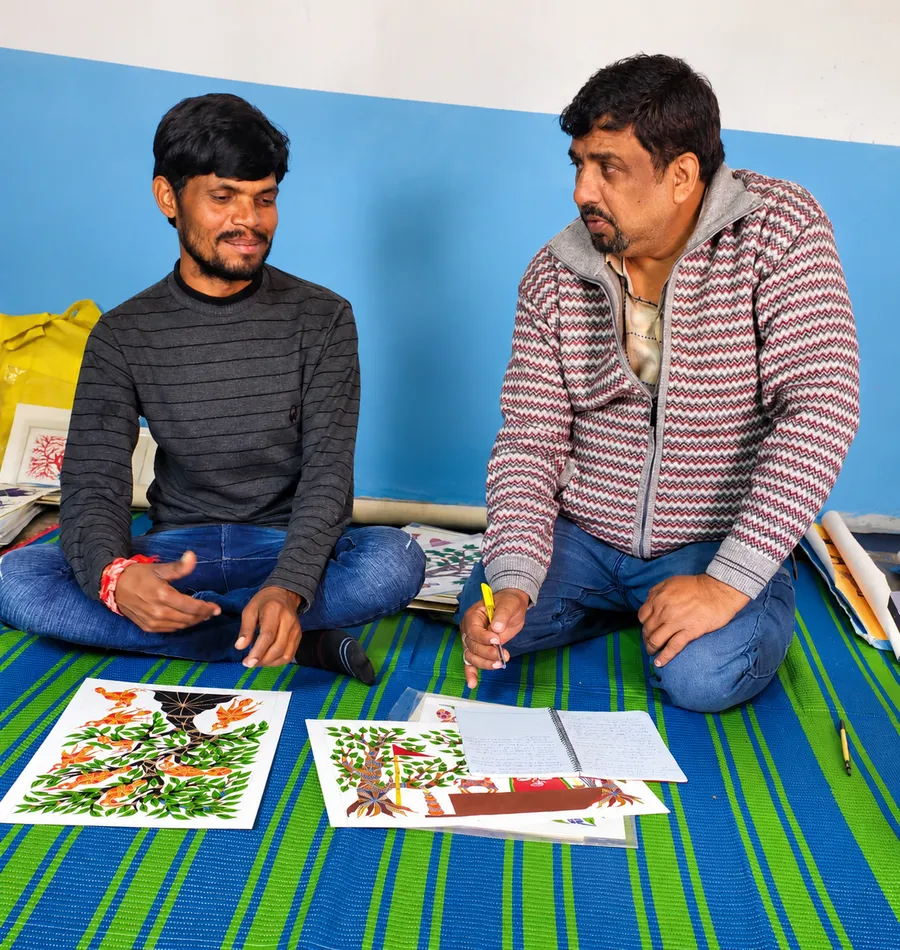
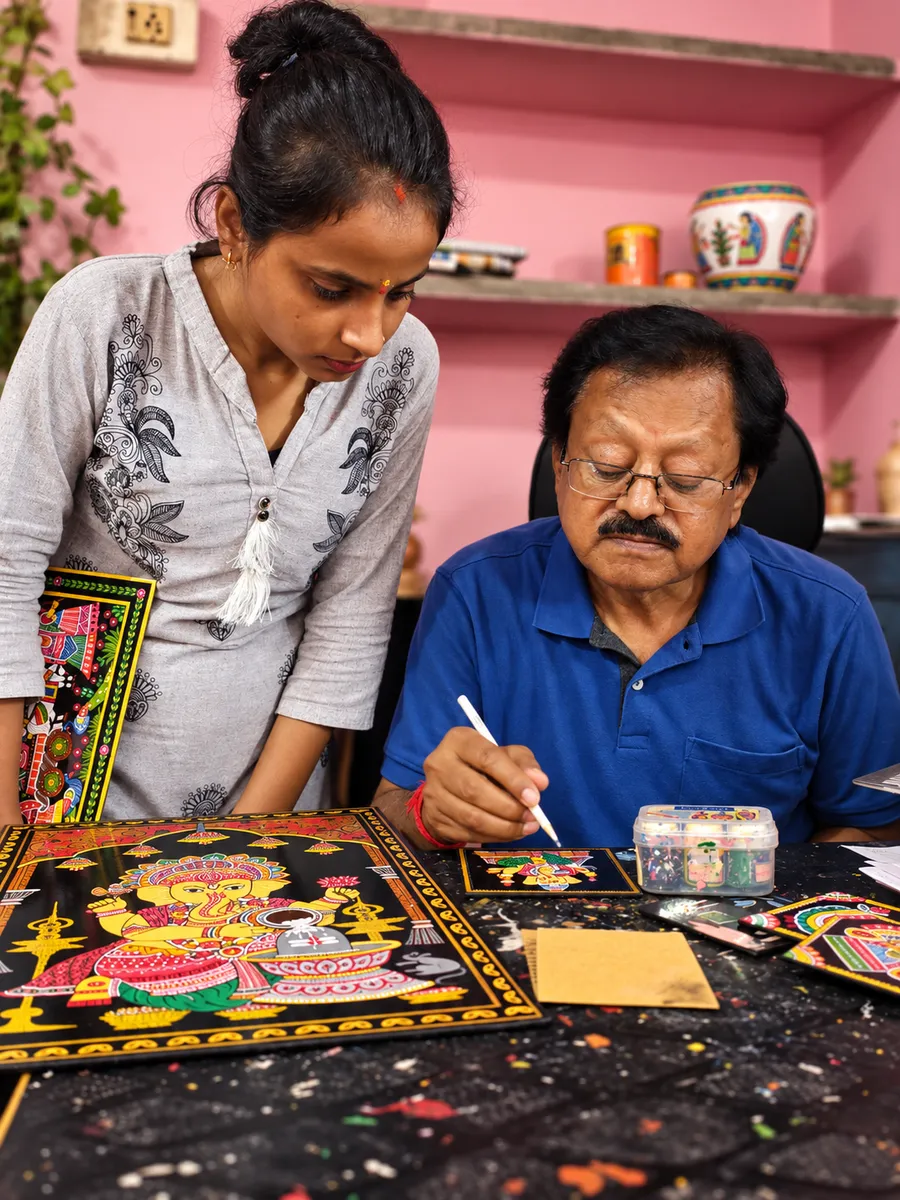
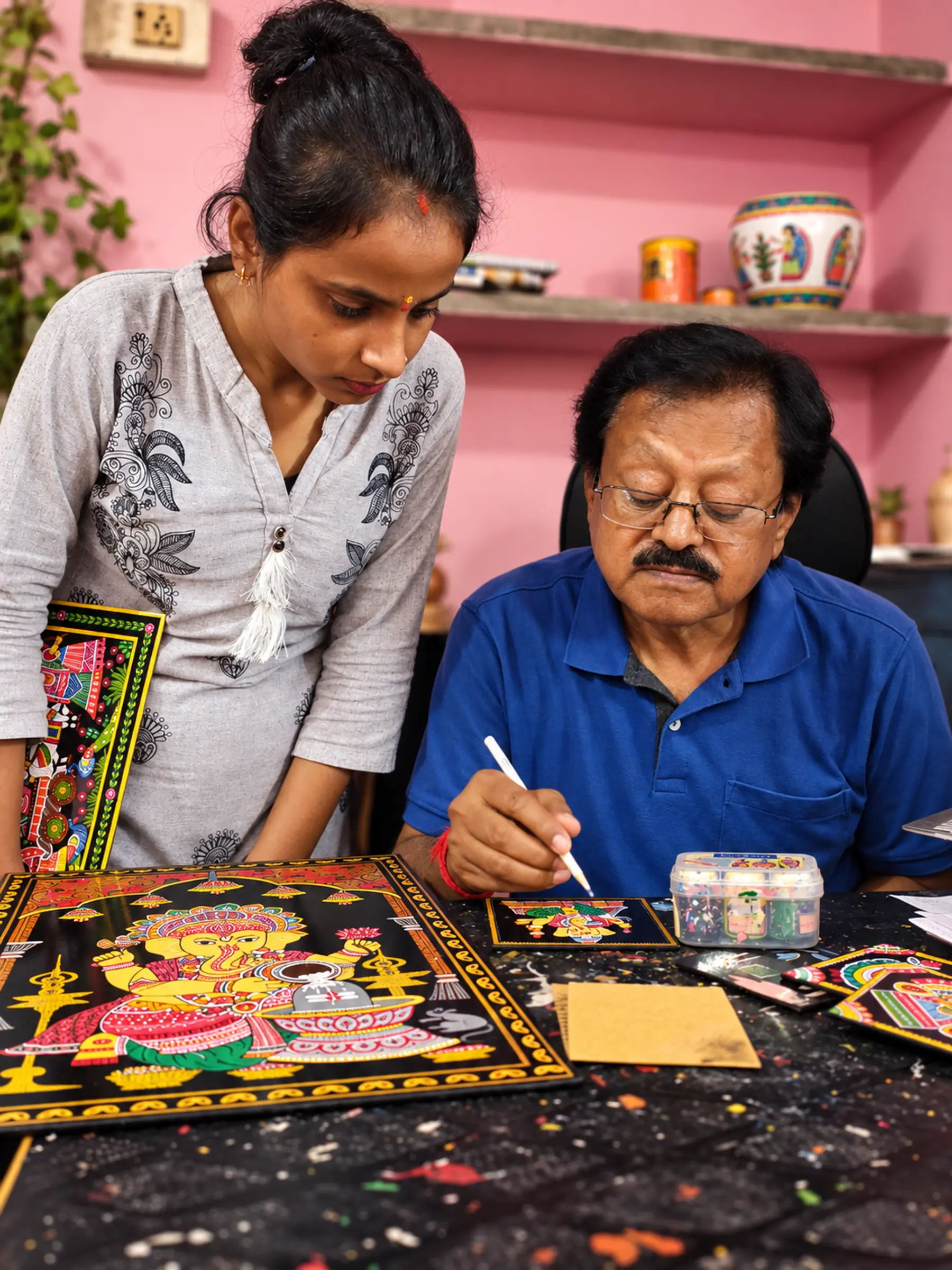
Training in quality, cost and time gives artists more control over their work. Co‑design with designers and contemporary artists opens new formats, scales and buyers.



Living Art Traditions works with artists and artisans to improve how they work and what they earn. Training, financial literacy and pathways to market strengthen livelihoods, and health and eye-care support decent work.
See how the initiative works Pictured: Rudhan Devi, Sohrai and Khovar artist, Hazaribagh, Jharkhand.The skill is not in question. What lets artists down is everything around the work: who sets the price, who gets the credit, what the work costs the body, and who can reach a bank, a scheme or a buyer. India has no national survey of traditional artists, so the evidence comes from studies of single art forms. The same problems appear in one after another.
Middlemen place the orders, choose the designs and keep most of the margin, and few artists can reach buyers on their own.
Motifs are copied onto mass-market and luxury goods, and the artist's name rarely goes with the work. Copies compete on price, and the credit goes elsewhere.
Hours of close, precise work bring pain and eye strain. Much of it is done at home, often at night, without dry storage or health cover.
Income comes order by order, savings are thin, and few artists know which government schemes they qualify for.
Women do much of the work, yet in several traditions men handle the trade and the price. In some places caste has shaped who could paint what and who met buyers, and distance keeps many artists waiting for buyers to come to them.
Natural colours are giving way to synthetic paint, the mud walls and rituals some traditions grew from are disappearing, and fewer young people take up the work.
Each challenge is documented in published studies and reporting across several art forms. Read the evidence and research
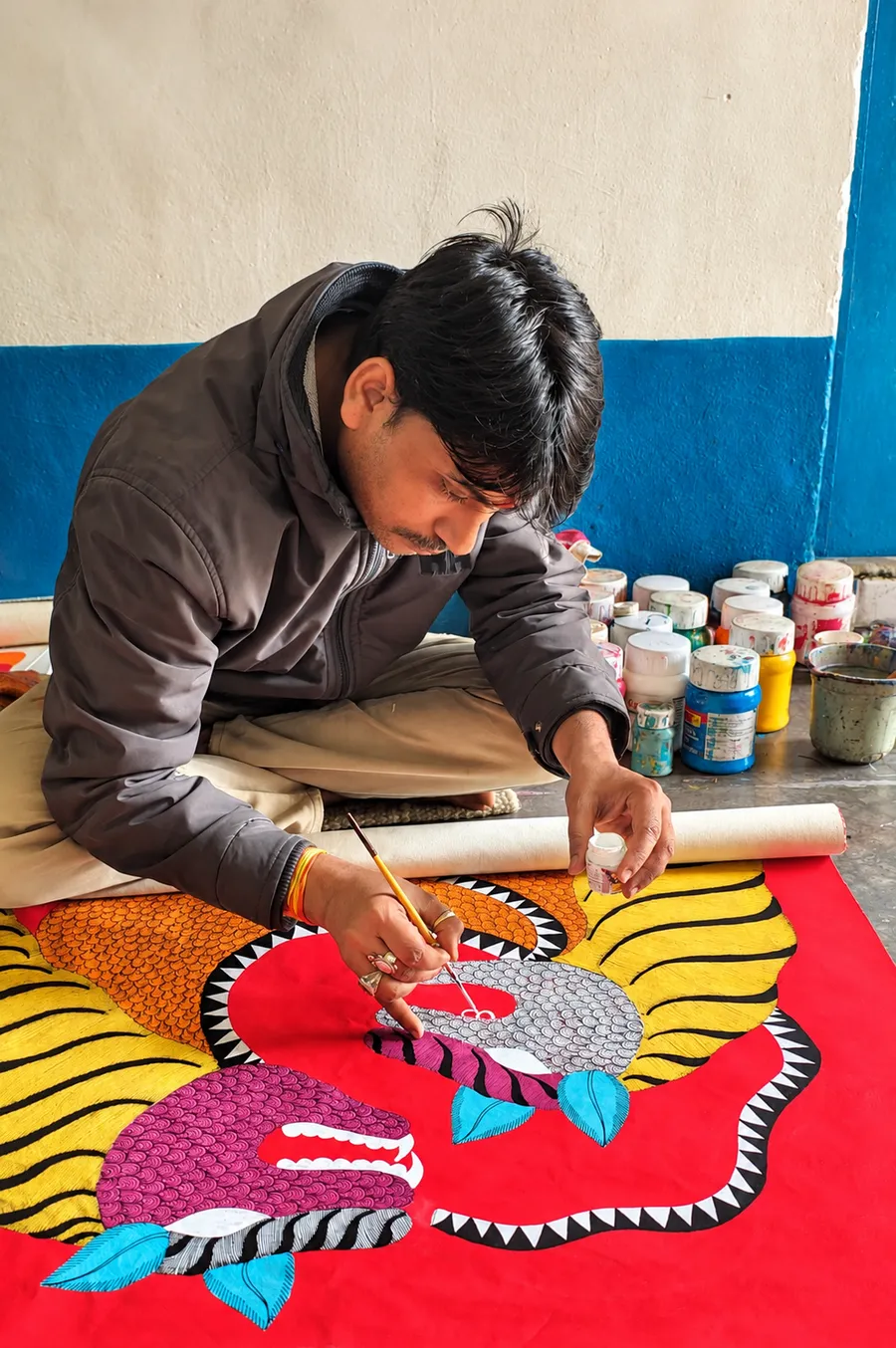
Programmes in several traditions show that these problems respond to the right support.
About 1,250 Warli women learned to apply their art to new materials, formed producer groups and took paid orders. Four of six groups opened bank accounts.
A Sanjhi paper-cut master from Mathura worked with a contemporary artist, and the work was shown at Homo Faber 2026 in Venice.
157 Gond artists sell online under a written agreement that gives them 60% of profits. Artists near Ranthambhore who stopped selling through Jaipur dealers found ready buyers.
Sohrai and Khovar artists learned to paint on paper, and a register of nearly 500 artists helps buyers find them. Their work covers a 17,500 sq ft public wall in Ranchi.
A Warli-led organisation holds the Warli Geographical Indication, so the right to the name rests with the community.
Living Art Traditions works with master artists and the families that keep these forms alive, from miniature painting and Sanjhi paper-cut to Sohrai, Khovar, Saura and Zardozi. Their work has been honoured by the Government of India and shown in Venice, London, New York and Hong Kong.

A master of Mughal and Company School painting, he has restored historic paintings at Jaipur's City Palace and exhibited in Belgium, Mauritius, Algeria and Hong Kong.

A national award winner with three decades of practice. His paper sculptures with artist Sumakshi Singh took Sanjhi from temple stencils to Venice.

Cuts lace-like designs freehand, often without a sketch. National Award 2002 and Shilp Shiromani 2008, with exhibitions in Singapore, London, Argentina and Switzerland.
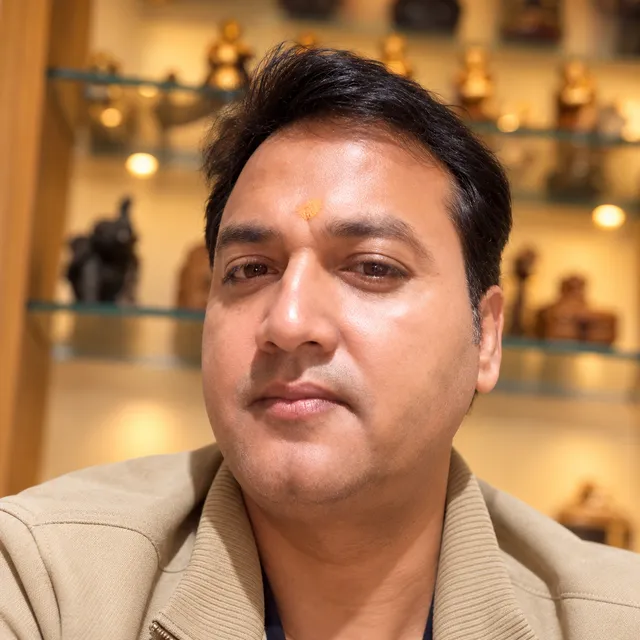
A third-generation artist who paints birds and flowers with lapis lazuli and malachite on wasli, silk and canvas, with solo shows in Mauritius, London and New York.
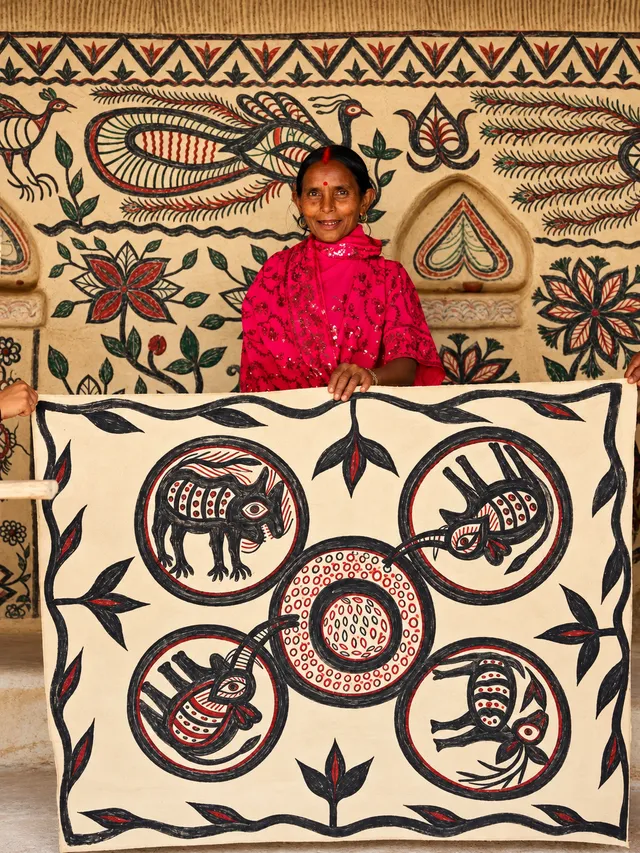
After losing her right hand, she kept painting with her left. Her work was shown in Emami Art's Convergences exhibition in 2026.

Son of a Padma Shri awardee, he holds a master's in fine arts, won the Excellence in Zardozi Award in 2025 and joins Kalamkari with Zardozi in shared works.

A Roshan Kalapesi Award winner whose work was shown in Sanjhi Revisited at the India Habitat Centre, New Delhi. He teaches workshops to pass the form on.

Works across the Mughal, Kishangarh, Jaipur, Kangra and Jain styles, sometimes with a single-hair brush, in detail that shows fully only under magnification.
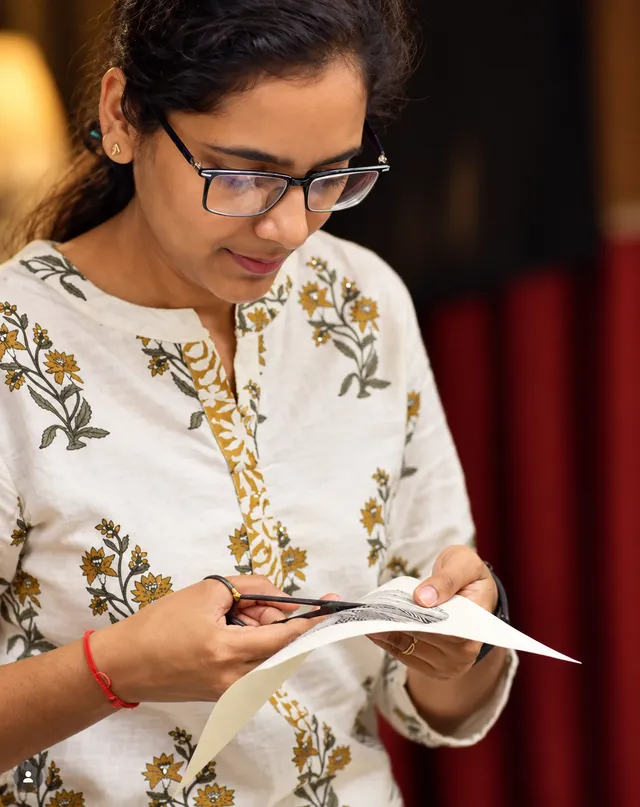
Known for paper-cut work at the smallest scale, she holds the Haryana State Handicraft Award and has exhibited in New Delhi.

Turns handmade paper into detailed birds, nature and narrative scenes, and teaches the form to students.
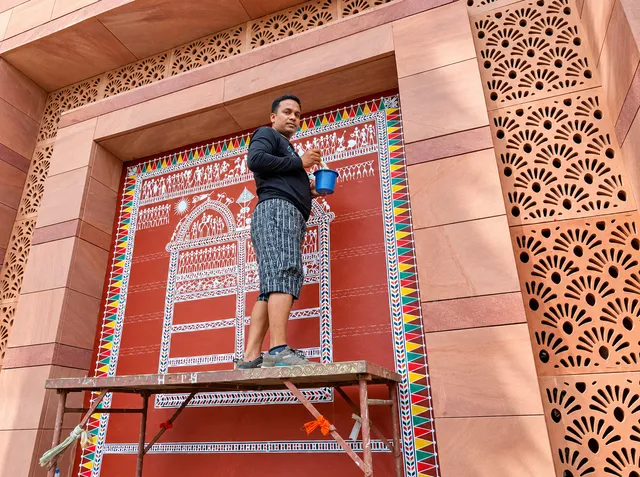
Paints village life, deities and nature in Saura's geometric language, and has exhibited at Dilli Haat and Pragati Maidan in New Delhi.
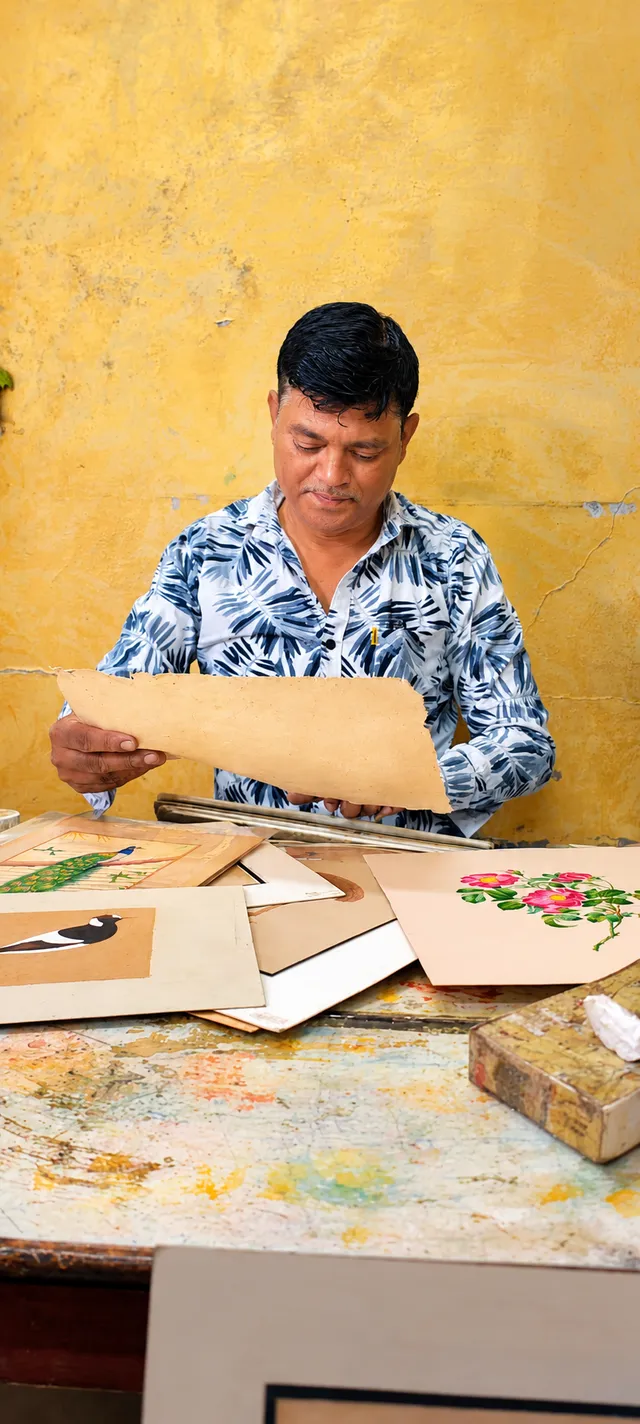
Paints in the Mughal and Jaipur schools with pigments from flowers, vegetables and minerals, and has shown in Delhi, Ahmedabad, Pune and Jaipur.
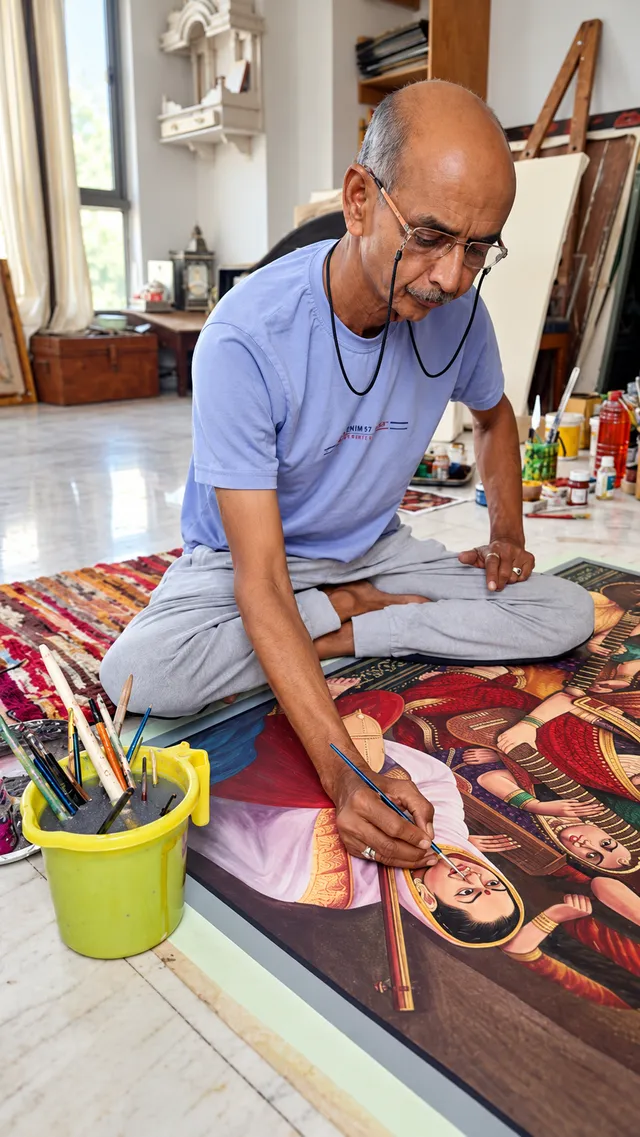
Works on wasli paper and canvas with natural pigments, burnishing and gold and silver leaf, in the region of the Mewar school.
Paintings, paper-cuts and embroidery by artists in the initiative, from miniatures that reward a magnifying glass to murals that cover a wall. Every piece is made by hand by a named artist.
Select any work to view it full screen. Zoom in, then drag or scroll to see every part of it.
When a traditional artist works with a designer, an architect or a contemporary artist, the skill stays the same but the scale, the format and the audience change. The result is work made for a hotel lobby, an office or an international exhibition, still made by hand by the artist.
Hotels, real estate developers, galleries and institutions can commission original or co-designed work through Tri-Impact's partner platforms, KalaAnchal and Dharohar Arts.
Mohan Kumar Verma's paper sculptures with artist Sumakshi Singh, cut from banana-fibre paper, were shown at Homo Faber 2026 in Venice.
Mohammad Bilal joins Zardozi embroidery with Kalamkari in shared wall pieces and carries a Mughal-era technique into contemporary work.
Ashutosh Verma has worked with Project Tarasha and Creative Dignity on new applications of Sanjhi paper-cutting.
Living Art Traditions runs five supports together, around the same artists. Training raises the quality of the work, the record of origin carries the artist's name, the route to buyers turns the work into income, financial literacy helps that income last, and health care keeps the artist working. Each provides solutions to the challenges artists face.
Training in quality, cost and time gives artists more control over their work. Co‑design with designers and contemporary artists opens new formats, scales and buyers.
A record travels with each work: the artist, the tradition, the place, the materials and the colours. A copy cannot carry it.
How the record worksThrough KalaAnchal and Dharohar Arts, work reaches institutions, hotels, galleries and buyers with the artist's name attached.
Sessions help artists manage irregular earnings, save through lean months, use formal banking and reach the government schemes they qualify for.
Health check-ups and eye screening, with spectacles where needed, for artists whose work depends on hours of close, precise attention.
CSR teams, foundations and institutions can fund the whole initiative or one part of it, from training and health camps to financial literacy, or commission work through the partner platforms.
Every work in the initiative is made by hand, so no two are the same. Living Art Traditions keeps a record for each one: the artist, the tradition, the place, the materials and the colours. The record goes with the work to the buyer, through KalaAnchal and Dharohar Arts.

Their name stays on the work wherever it is shown or sold, so a buyer who values the work can find the artist again.
Proof of who made the work and where, and the story behind it to share with guests, staff and visitors.
A record that procurement, CSR and sustainability teams can check before they commission or buy.
Since 2012, Tri-Impact has run health camps, eye screening, financial literacy and social security enrolment for workers in labour-intensive production across Uttar Pradesh, Rajasthan, Haryana, Uttarakhand and Delhi-NCR. Living Art Traditions brings the same field systems, partners and methods to artists.
Cumulative figures for Tri-Impact programmes since 2012.
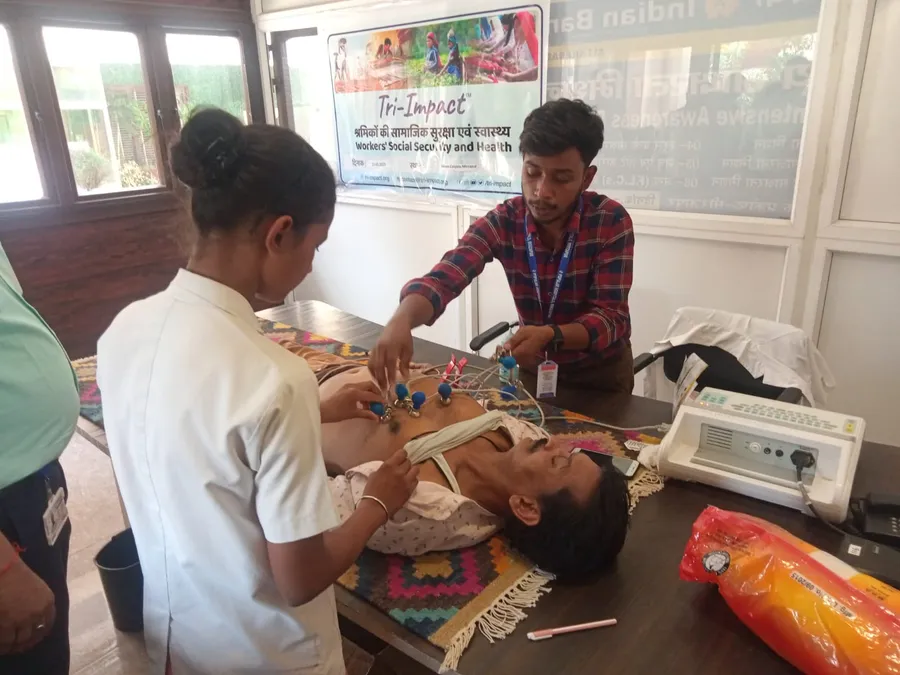
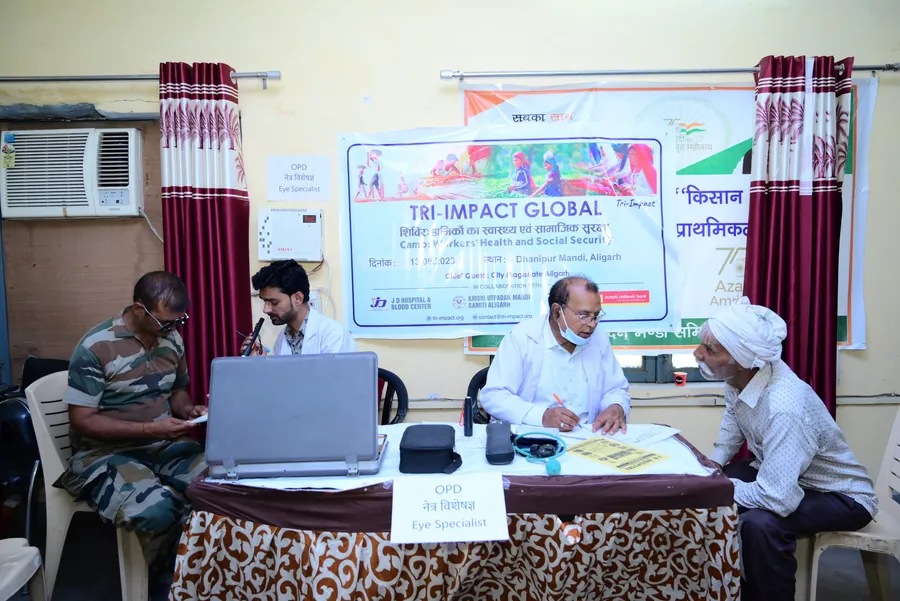

Tri-Impact connects artists to KalaAnchal, a curatorial platform that brings their work to institutions and buyers.
Visit KalaAnchal (opens in a new tab)Dharohar Arts, a partner platform, brings artists' and artisans' work to institutions and buyers.
Visit Dharohar Arts (opens in a new tab)Madhubani, Gond, Bhil, Saura, Sohrai, Khovar, Tikuli, Warli, Phad, Sanjhi, Rajasthani and Pahari miniature, and Zardozi embroidery. The work includes paintings, paper-cuts and embroidery. The list grows as the initiative reaches new artists and states.
Training in quality, cost and time, co-design with designers and contemporary artists, financial literacy and savings, health check-ups and eye screening, a record of origin for each work, and a route to buyers through KalaAnchal and Dharohar Arts. The supports run together, around the same artists.
Yes. CSR teams, foundations and institutions can fund the whole initiative or one part of it, such as training, health camps or financial literacy. A first conversation sets the artists, the places and the scope.
The initiative works on preventive health care, livelihood enhancement and the promotion of traditional arts, which are activities listed in Schedule VII of the Companies Act, 2013. Tri-Impact Global is registered with the Ministry of Corporate Affairs to undertake CSR activities (CSR00007814).
Start a conversation with the space, the scale and the timeline in mind. Original and co-designed commissions are placed through KalaAnchal and Dharohar Arts, and each work carries its record of origin.
The artist's name, the tradition, the place, the materials and method, and the colours used. It goes with the work to the buyer, so the artist is credited wherever the work is shown or sold.
KalaAnchal is an independent curatorial platform and Dharohar Arts is a partner platform. Tri-Impact works with artists on skills, finances, health and records of origin, and connects them to both platforms, which bring their work to institutions and buyers.
Fund training, health and eye care or financial literacy for artists, or commission work through KalaAnchal and Dharohar Arts. A first conversation is the quickest way to see where Living Art Traditions fits your CSR or philanthropic priorities.