ABOUT TRI-IMPACT GLOBAL

The field expanded the mandate.

Tri-Impact Global is an Indian public charitable trust, registered in 2012. Fourteen years of field work now inform its work across Climate Action, Decent Work and Livelihood Security.

Public charitable trust | Registered 18 October 2012

Woman artisan sitting beside a handwoven carpet in a rural landscape.
OUR STORY

Founded on a field observation. Shaped by what followed.

Tri-Impact Global commenced operations in Varanasi in October 2012, initially under the name GoodWeave India Trust. Its objective was to build field systems that would protect workers and children at the base of textile production.

The organisation worked inside handmade carpet, apparel and textile communities where people producing for national and international markets remained outside the formal systems meant to reach them. Health care, social protection, education and responsible employment were all designed on paper to cover these workers. In practice, few of the institutions responsible had the local relationships or operational reach to deliver.

Years of field work showed that these conditions could not be addressed separately. A worker's health affected household income, income affected whether children stayed in school, and market pressure on wages weighed on the survival of heritage skills as much as climate stress weighed on migration and economic insecurity.

On 5 July 2022, the Trust adopted the name Tri-Impact Global. The change reflected a wider mandate, shaped by a changing operating environment and by needs the original remit no longer covered. The name recognises three goals that had become inseparable in practice: People, Planet and Prosperity.

Today, Tri-Impact applies the field knowledge, relationships and institutional experience built since 2012 to programmes that connect human well-being, ecological resilience and viable livelihoods.


WHO WE ARE

Three focus areas. One connected system.

Environmental pressure, insecure work and fragile livelihoods converge on the same households, in the parts of the economy where Tri-Impact works.

People, Planet and Prosperity express the organisation's vision. They are not programmes. They guide three connected focus areas.

01

Climate Action

Across climate mitigation, adaptation and resilience, Tri-Impact supports nature-responsive livelihoods, strengthens community and institutional responses to environmental change, and generates knowledge that can inform policy, finance and scalable solutions.

02

Decent Work

Health care, financial access, social protection and responsible employment systems move closer to workers in labour-intensive production through this focus area. Tri-Impact also builds the capacity of businesses to understand their own production networks and act on what they find.

03

Livelihood Security

Heritage skills, local enterprise and environmentally responsible production depend on economic conditions that this focus area works to strengthen, so that valuable knowledge and work remain viable.

These focus areas do not operate in isolation. A single programme or initiative may contribute to more than one.

ONE METHOD ACROSS IMPLEMENTATION WORK IN EACH FOCUS AREA

A consistent method. Adapted to each setting.

Within the on-the-ground implementation work across the three focus areas, the Neev Cycle provides a shared discipline for building trust, understanding what already works, capturing stakeholder expectations, mapping the wider system and documenting change.

The method remains consistent. Its application changes with the people, institutions and conditions involved.

Explore the Neev Cycle
FIELD RECORD

Fourteen years of presence cannot be built from a distance.

Tri-Impact's institutional capacity comes from sustained work inside worker communities, production clusters, heritage economies and climate-vulnerable regions.

14 yearsof field presence since 2012
515,523 workersreached through programmes, welfare access and social protection linkage
227,590 homeworkersidentified and linked to formal systems for the first time
141,628 childrenin worker households supported with education and welfare access
375+ climate adaptation solutionsdocumented in the Uttarakhand Himalaya
30 companies and 300+ manufacturing unitsengaged through Roshni capacity building
357,638 support actionsdelivered during the COVID-19 response

These figures reflect the breadth of Tri-Impact's work across its programmes. Programme-specific evidence and current outcomes are presented within Our Work and Insights.

LEADERSHIP

Leadership rooted in field practice.

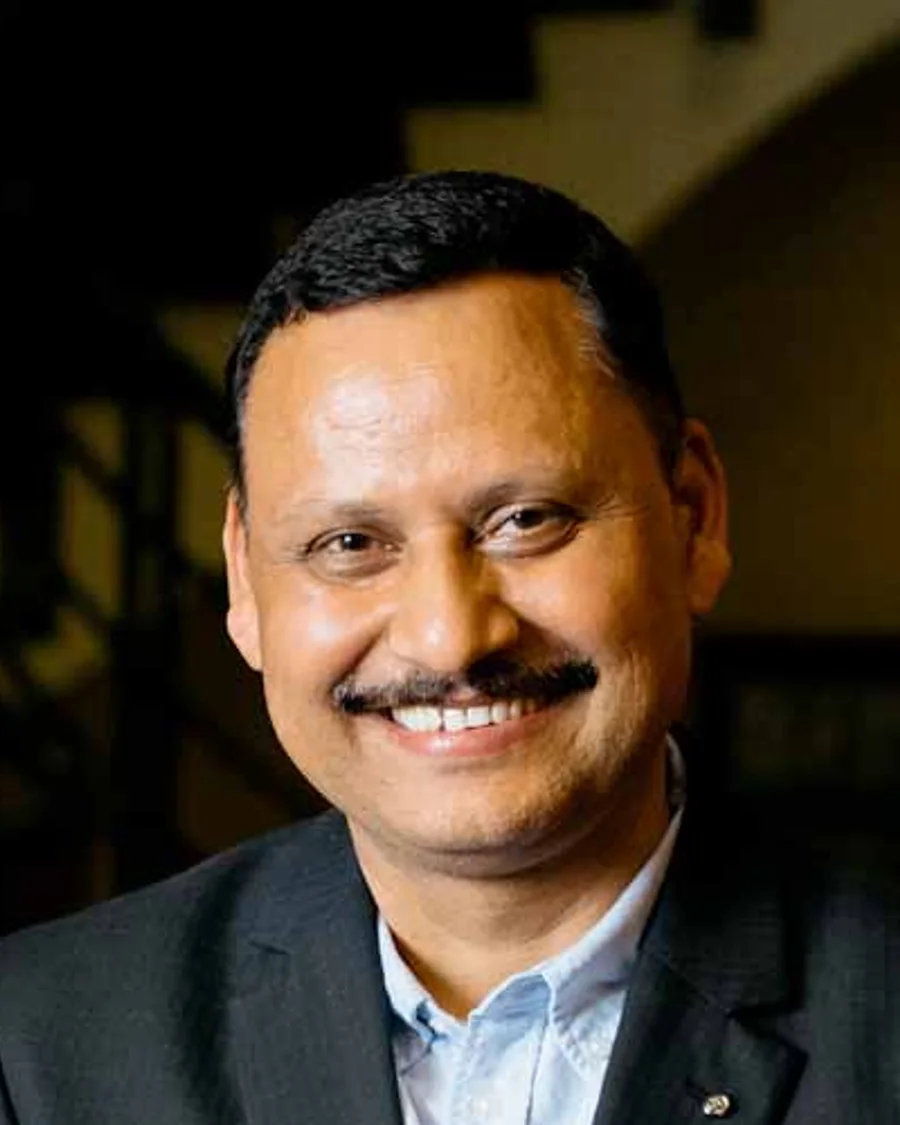
Manoj Bhatt, Managing Trustee and CEO of Tri-Impact Global

Manoj Bhatt

Managing Trustee and CEO

Manoj Bhatt has worked across sustainability, child rights, community development and climate action since the 1990s.

He holds a master's degree in International Affairs from Columbia University's School of International and Public Affairs. He is an Ashoka Fellow and Ford Foundation Fellow and has served on the ISEAL Alliance Technical Committee.

In 1997, he represented the Central Himalayan region at the Rio+5 Earth Summit at the United Nations General Assembly. He has since contributed to national and international discussions on responsible production, child rights, business responsibility and sustainable development.

He led the Trust's transition into Tri-Impact Global, a change that connected its field experience with a wider mandate across People, Planet and Prosperity.

OUR TEAM

Different disciplines. One institutional mandate.

Tri-Impact's team combines sustainability practice, programme delivery, community relationships, administration and financial management.

Programme leadership

Sandeep Chopra, Head of Sustainability and Impact

Sandeep Chopra

Head of Sustainability and Impact

Sandeep Chopra brings more than 30 years of experience across the commercial and development sectors, with expertise in corporate sustainability and responsible production.

His work connects programme design, environmental practice and the market systems needed to sustain artisan livelihoods, including Tri-Impact's heritage textile and natural colour work in the Garhwal Himalaya.

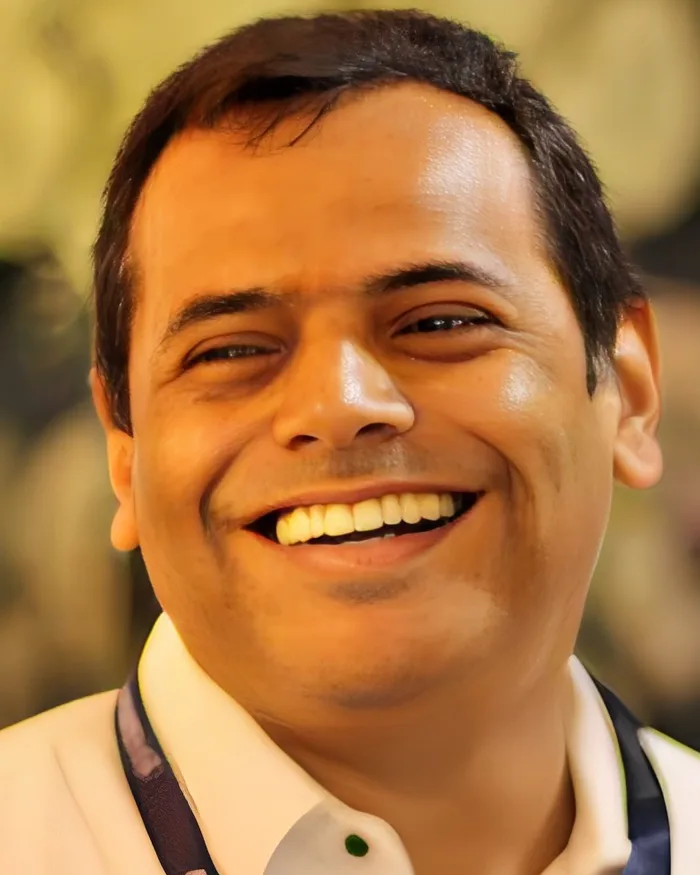
Vivek K. Singh, Head of ESG & Climate Programmes

Vivek K. Singh

Head of ESG & Climate Programmes

As Head of ESG & Climate Programmes, Vivek K. Singh has 17 years of experience in strategic partnerships, resource mobilisation and market development.

His focus is on institutional relationships and programme design across climate action, traditional knowledge, responsible production and livelihood security. He translates field evidence into forms that funders, research institutions, companies and implementation partners can use.

Dr Ankush Nautiyal-Ross, Programme Lead, Creative Economy and Global Engagement

Dr Ankush Nautiyal-Ross

Programme Lead, Creative Economy and Global Engagement

Dr Ankush Nautiyal-Ross holds a Ph.D. in Biology from the University of Arkansas, USA, and has more than eight years of teaching experience in U.S. higher education. Her background spans agriculture, ecology, environmental science and artificial intelligence, most recently as Senior Biology Reviewer and STEM Specialist at SpaceXAI.

At Tri-Impact she supports programmes in traditional arts, creative livelihoods, artist development and international engagement, and works to connect Indian artists with wider audiences and opportunities.

Dr Rashid Raza, Programme Coordinator

Dr Rashid Raza

Programme Coordinator

Dr Rashid Raza has worked in labour rights and child labour prevention in India's handmade carpet sector since 1995.

He holds qualifications in Social Work at bachelor's, master's and doctoral levels. His work across successive stages of the institution's history gives him extensive knowledge of worker communities, production clusters, local relationships and programme implementation in and around Varanasi.

Institutional operations

Pradeep Kumar Raghav, Head of HR and Administration

Pradeep Kumar Raghav

Head of HR and Administration

Pradeep Kumar Raghav leads the human-resource and administrative systems that support Tri-Impact's programme delivery.

His work covers personnel coordination, institutional administration and the operational requirements of teams working across different programmes and locations.

Hari Pratap Singh, Accounts Officer

Hari Pratap Singh

Accounts Officer

Hari Pratap Singh manages the organisation's financial records and day-to-day accounting processes.

He supports statutory compliance, programme expenditure tracking, donor reporting and the preparation of financial information required for annual audit and institutional review.

GOVERNING BOARD

Trustee oversight informed by development, culture and field practice.

The Governing Board provides fiduciary and strategic oversight. Executive leadership remains responsible for programme delivery and the institution's day-to-day management.

Geeta Athreya, Trustee

Geeta Athreya

Trustee

Geeta Athreya is an independent development consultant with more than 30 years of experience across government, bilateral and multilateral institutions, particularly in health and education.

Her international engagements have included the Third World Summit for Children in Greece, the International Union for Health Education Conference in Amsterdam and the Communication for Development Conference in Kathmandu.

She has served on the board since the institution's early years and brings long-term knowledge of its governance and development mandate.

Jagmohan Singh Bangani, Trustee

Jagmohan Singh Bangani

Trustee

Jagmohan Singh Bangani, a visual artist from Uttarakhand, holds an MFA from the Winchester School of Art at the University of Southampton.

He holds a Senior Fellowship from the Ministry of Culture, Government of India, for 2025 to 2027 and received the Kalanand All-India Grant Award in 2017 and 2023.

He founded the Bangani Art Foundation to support emerging artists from Himalayan regions with limited access to professional training and exhibition opportunities. He brings experience in cultural heritage, creative practice and Himalayan livelihoods to the board.

Manoj Bhatt

Managing Trustee. As Managing Trustee, Manoj Bhatt connects the Board's fiduciary and strategic responsibilities with the institution's executive leadership. His full profile appears in the Leadership section.

GOVERNANCE AND ACCOUNTABILITY

Clear responsibilities. Verifiable compliance.

Tri-Impact Global is governed by a Board of Trustees under the Indian Trusts Act, 1882.

The Board holds responsibility for fiduciary oversight, institutional direction and the review of major financial and programme commitments. The CEO and executive team are responsible for implementation, management and reporting.

The organisation's financial accounts are audited annually by an independent chartered accountant.

Governance documents available on written request include the Trust Deed, audited financial statements, FCRA annual returns and CSR-1 registration documentation.

Requests for governance information may be sent to contact@tri-impact.org.

Your enquiry goes to the Tri-Impact team and is kept as a record, as the Privacy Policy explains.