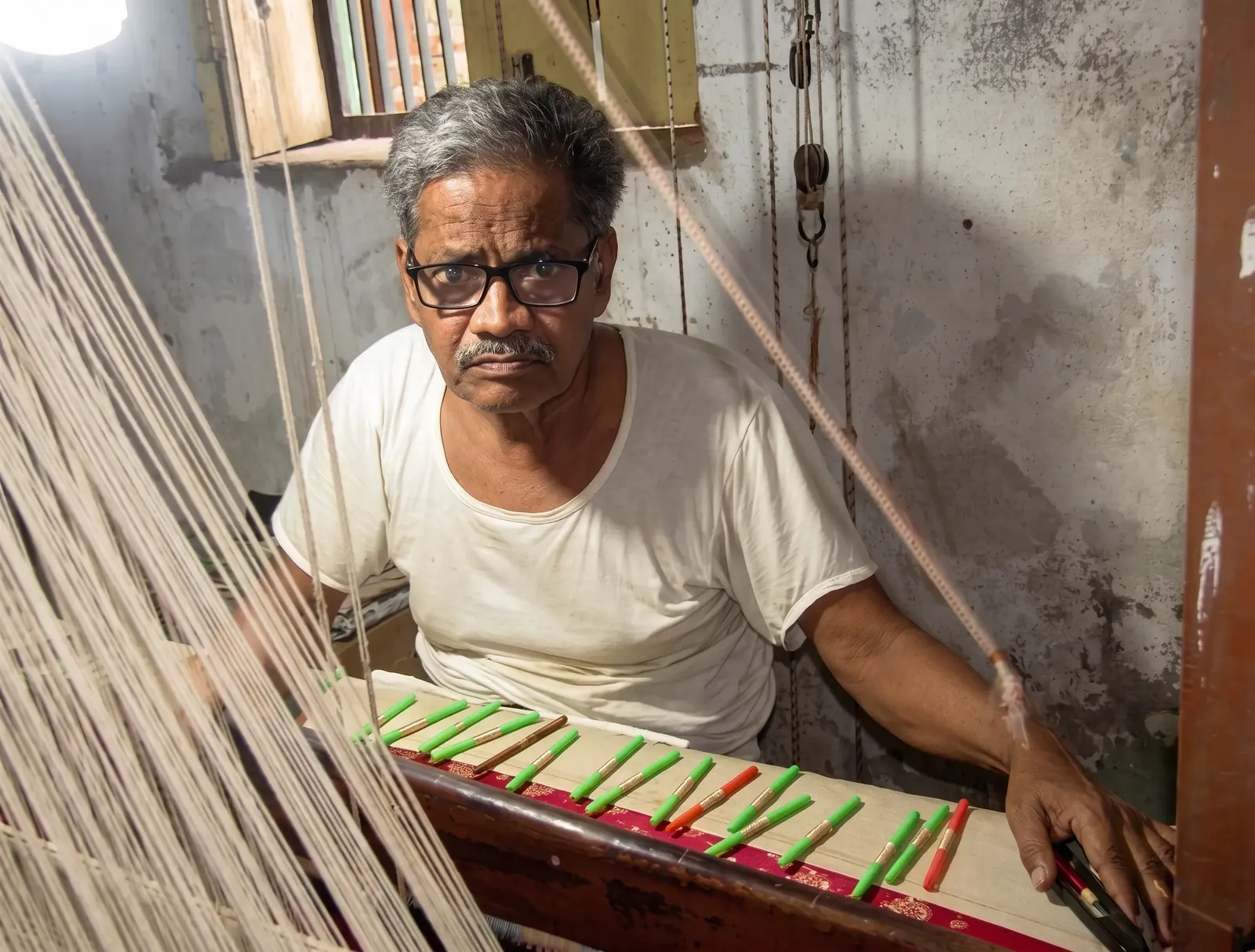
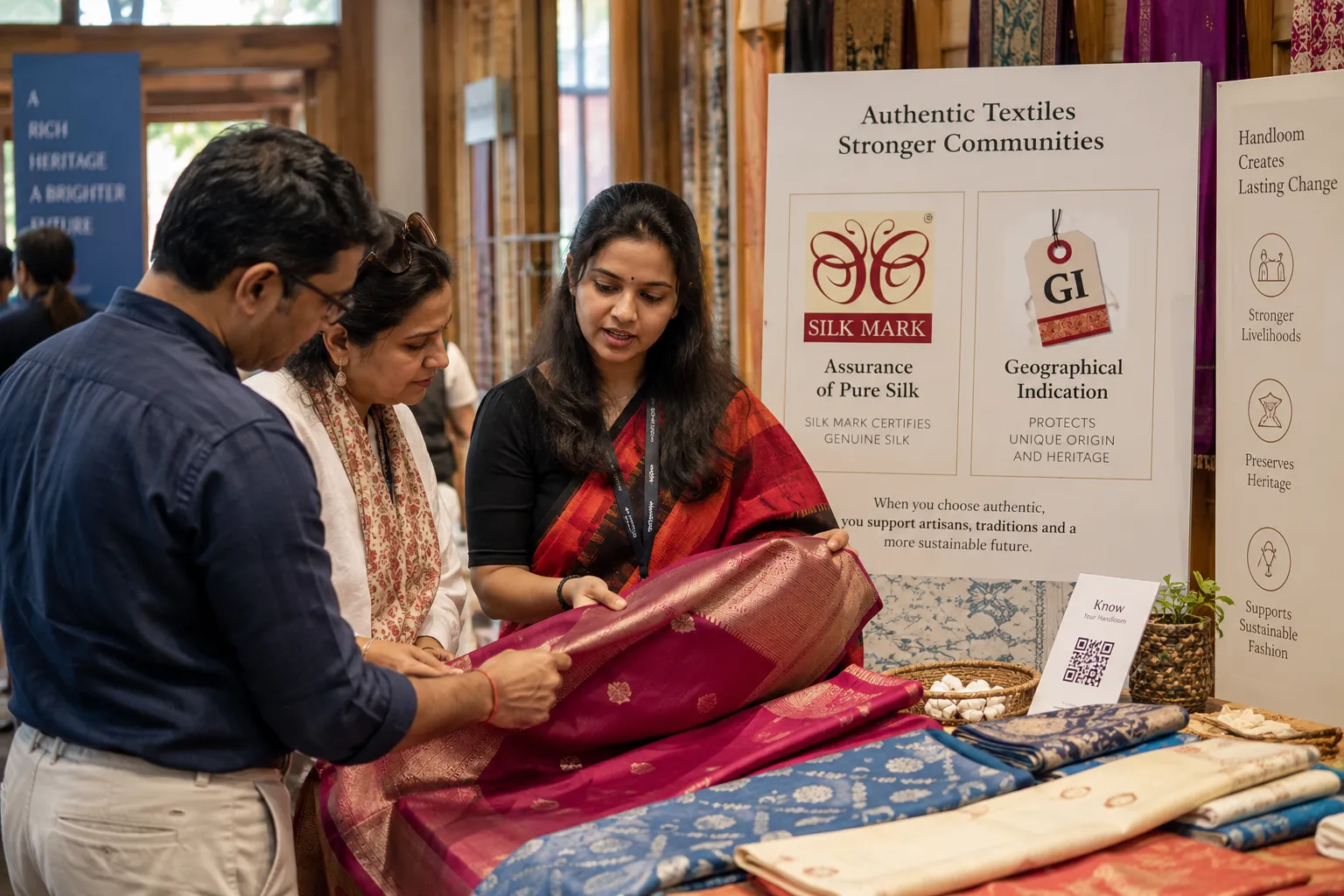
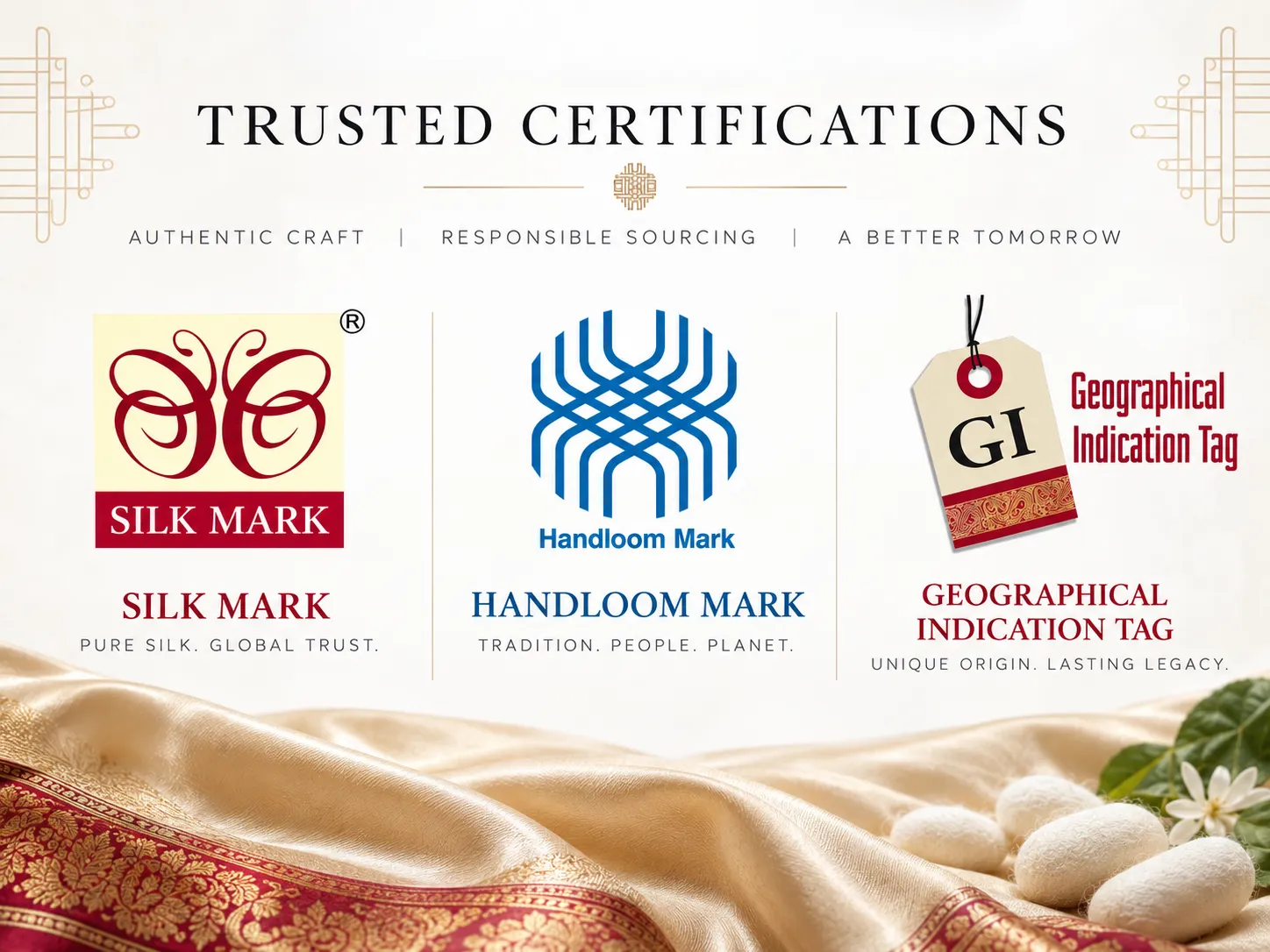
A handloom weaver in Varanasi takes days or weeks to produce a Banarasi saree in pure silk, using a technique no machine can fully replicate. A power loom produces a visually similar polyester imitation, sold under the same name, in a fraction of the time and cost, and most buyers cannot tell the two apart at the point of sale. The Banaras brocades and sarees Geographical Indication tag, registered in 2009 to protect production from five Uttar Pradesh districts, was meant to close that gap. More than fifteen years on, imitation volumes have kept growing, and a genuine weaver still typically receives only a fraction of the final retail price, most of it absorbed further up the chain.
The erosion compounds across generations. Ministry of Textiles handloom census data puts the national weaving workforce at around 26 lakh by 2020, down from 43.31 lakh in 1995, a decline of roughly 38 percent. The same census found 67 percent of handloom workers earning less than ₹5,000 a month, and only 1.2 percent earning more than ₹20,000. At that income, choosing not to weave is a rational decision, made by the generation whose parents and grandparents built the technique certification is meant to protect.